How to Choose Loupes That Protect Your Posture: Understanding the Benefits of Ergonomic Loupes for Long Procedures
If you’ve ever walked off a full clinical day feeling like your neck aged ten years overnight, you already understand this problem intuitively. The stiffness, the tension radiating across your shoulders, the lower back ache that follows you home — these aren’t signs of getting older. They’re signs of working with equipment that was never designed with your body in mind. Understanding how to choose loupes that genuinely protect your posture rather than quietly destroy it is one of the most consequential clinical decisions you’ll make. For dental professionals and surgeons across Singapore, Admetec has become the reference standard for answering this question correctly — not through marketing language, but through biomechanical engineering that puts practitioner health at the center of the design process.
Why Most Practitioners Choose Loupes the Wrong Way
Walk into any dental supply exhibition and you’ll see the same purchasing conversation happening at every loupe booth. Practitioners examine lens clarity, compare field of view specifications, test magnification levels, and ask about frame style options. These are legitimate questions. But they represent roughly half the evaluation framework that evidence-based loupe selection actually requires.
The half most practitioners skip entirely is biomechanical. How does this loupe affect my cervical spine over eight hours? What head flexion angle is required to access this optical field? How does weight distribution affect muscular fatigue during a three-hour surgical procedure? Where does this loupe position my working distance relative to my natural posture?
These questions don’t appear in manufacturer brochures because answering them honestly forces a difficult conversation about conventional loupe design. Most traditional loupes require 25 to 35 degrees of forward head flexion for practitioners to access their optical field. Research published in Surgical Technology International demonstrates that at 30 degrees of flexion, the effective load on the cervical spine escalates from baseline 10 to 12 pounds to approximately 40 pounds. Sustained for hours daily across careers spanning decades, this loading creates the musculoskeletal deterioration that quietly shortens careers across Singapore’s dental and surgical community.
Admetec Singapore’s engineering philosophy begins precisely where conventional manufacturers stop asking questions.
The Biomechanical Foundation: What Ergonomic Loupes Actually Do
How Admetec Rethinks the Optical Path
The core innovation separating Admetec from conventional loupe design isn’t a new lens formula or a lighter frame material — though both matter. It’s a fundamental rethinking of how the optical path reaches your eyes.
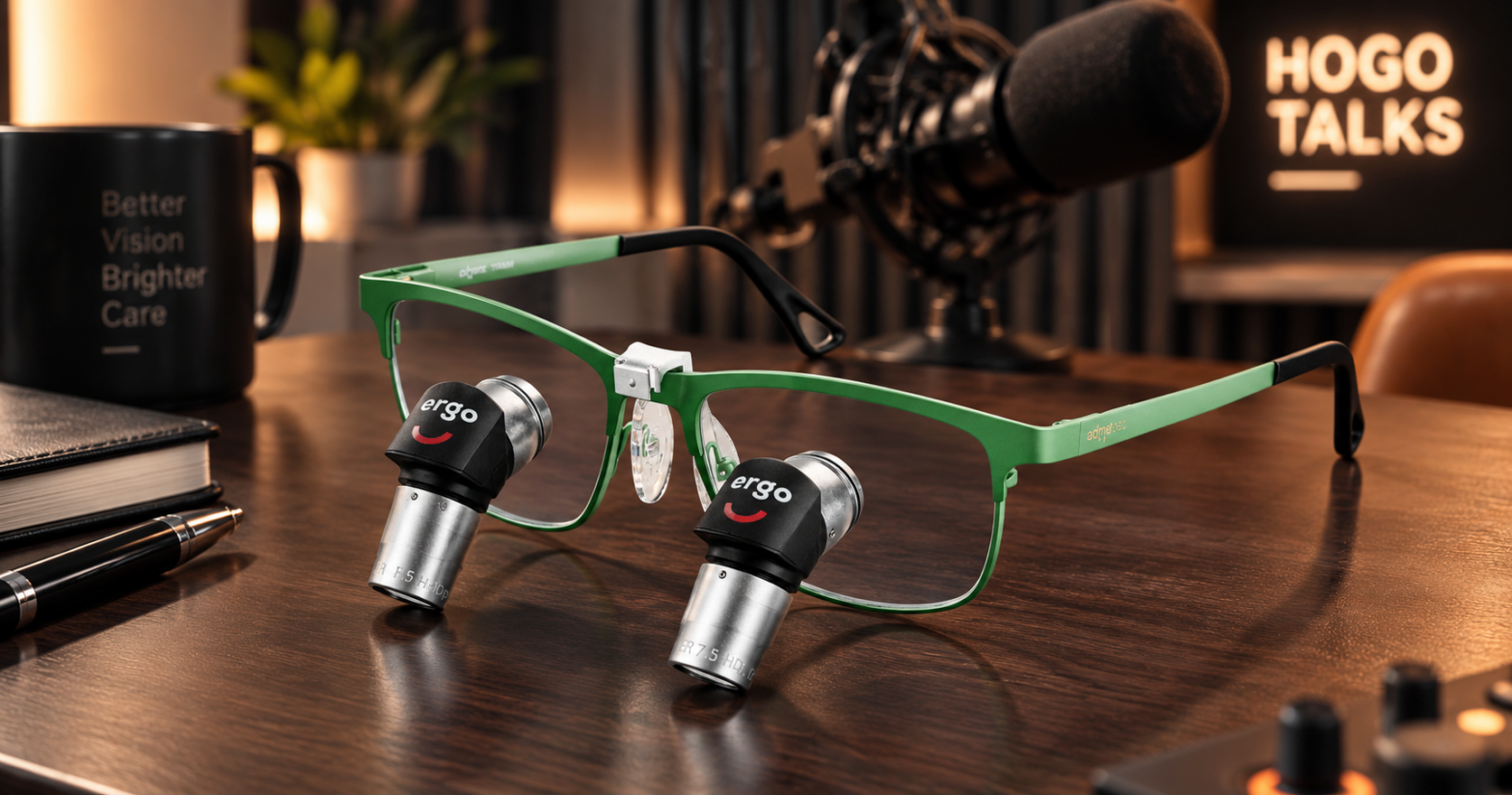
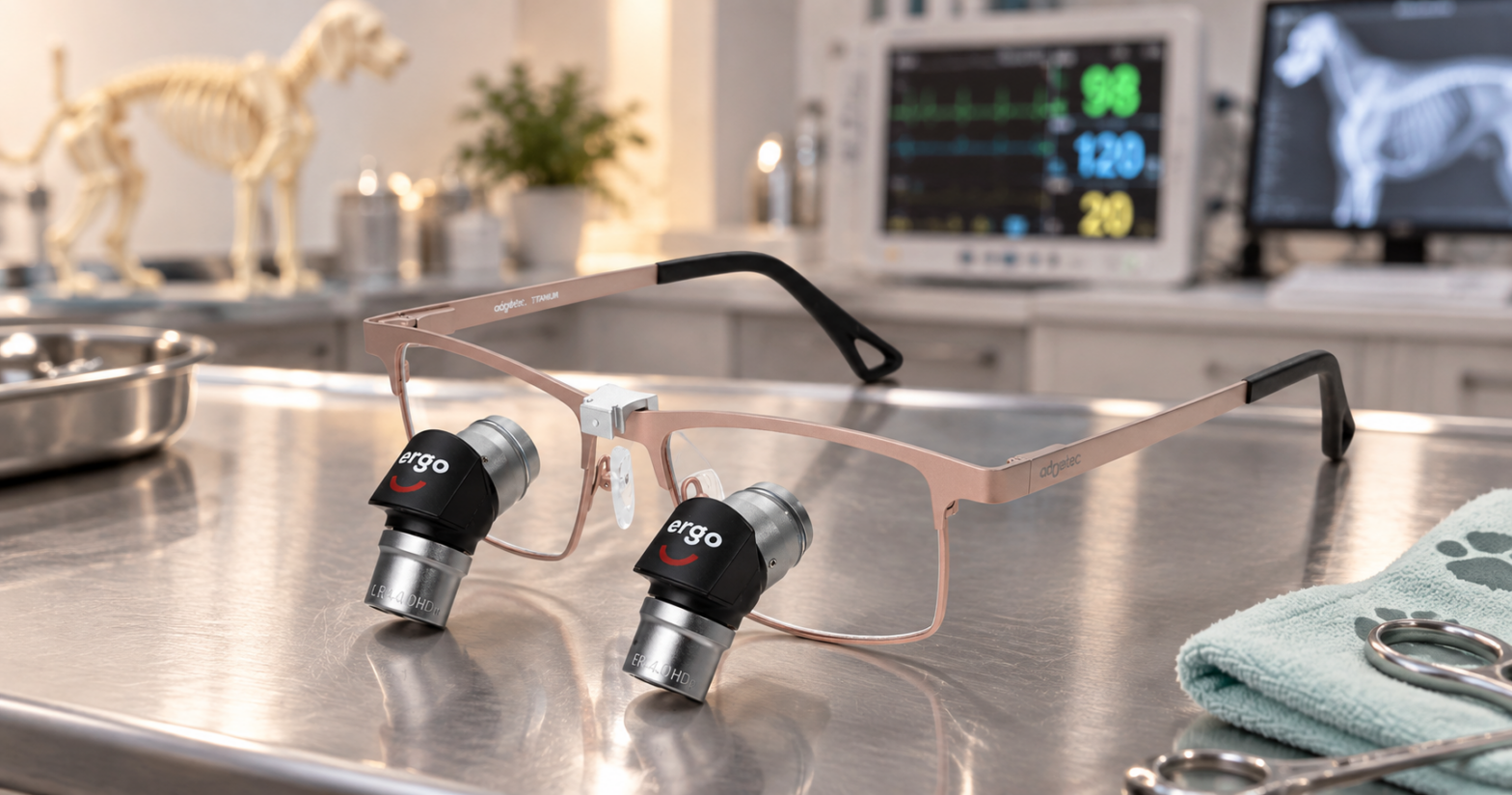
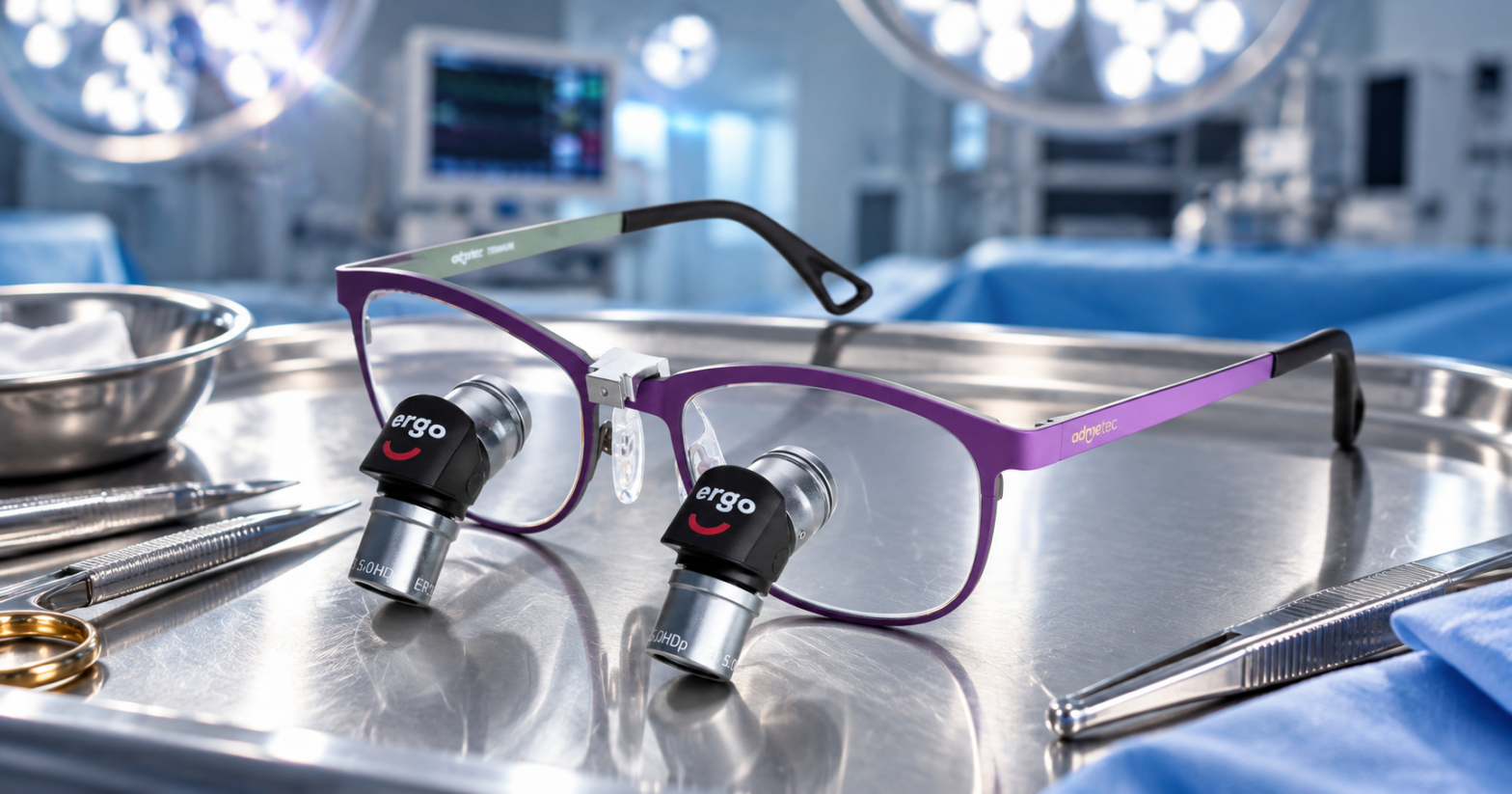
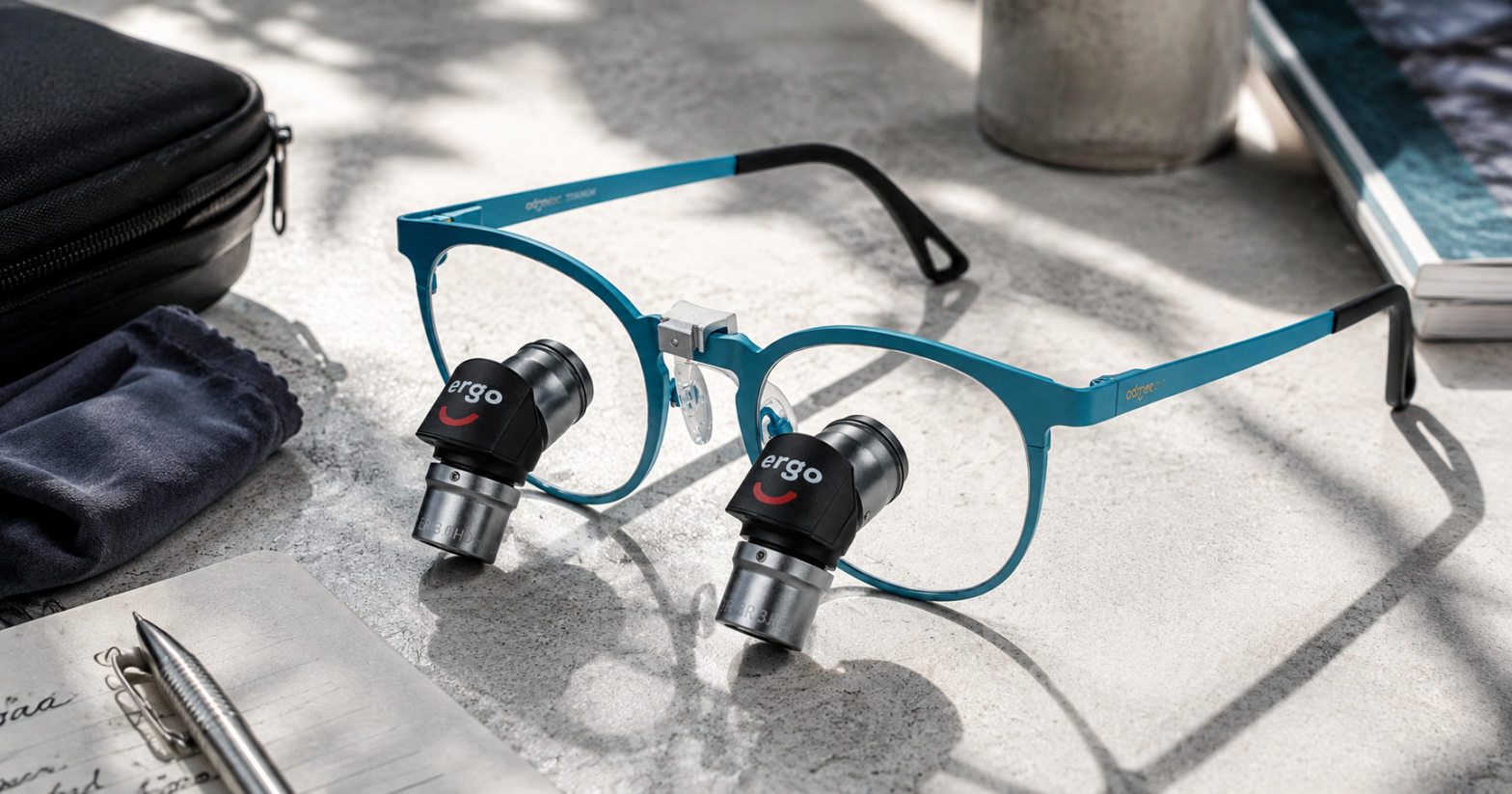
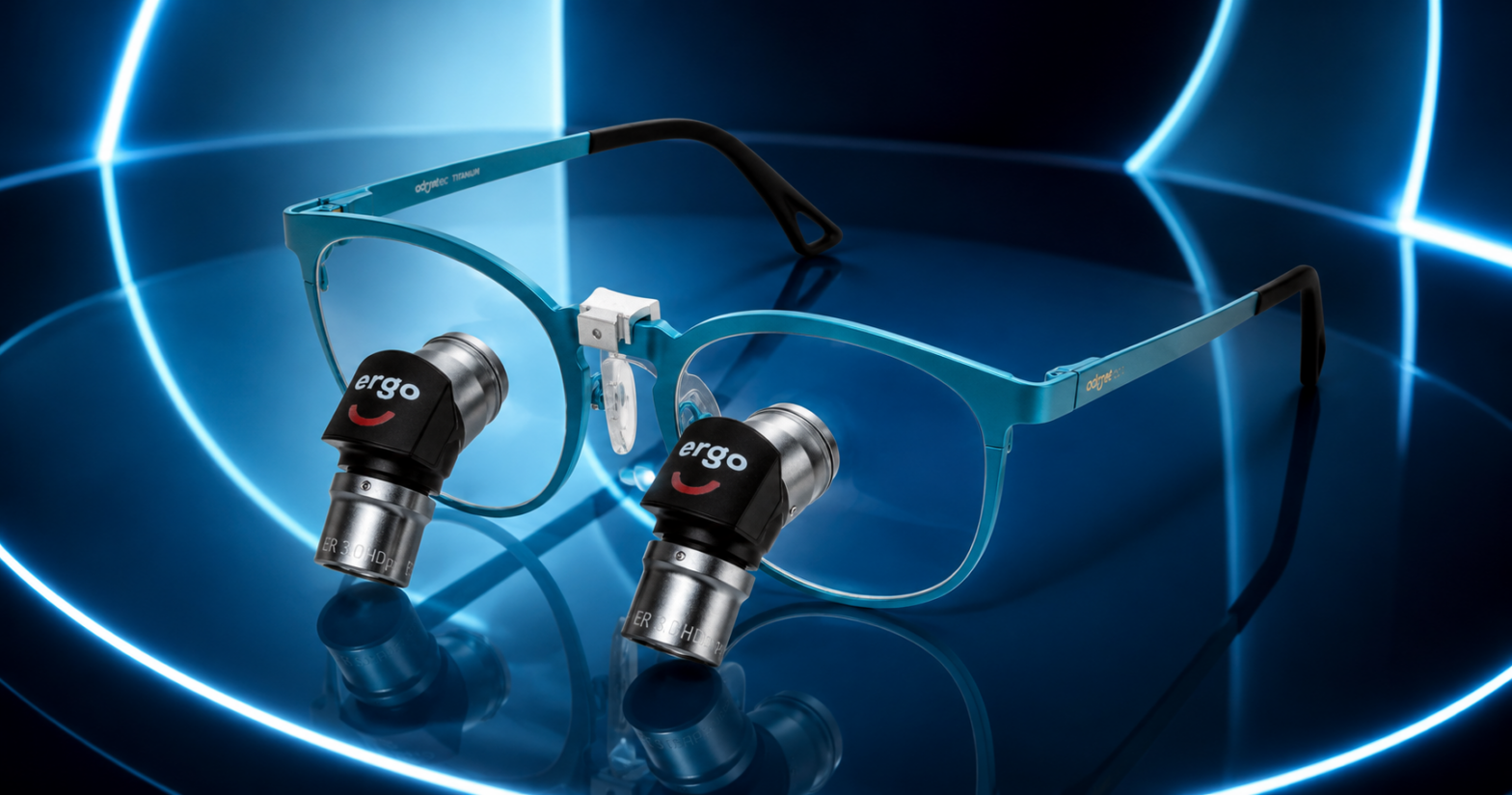
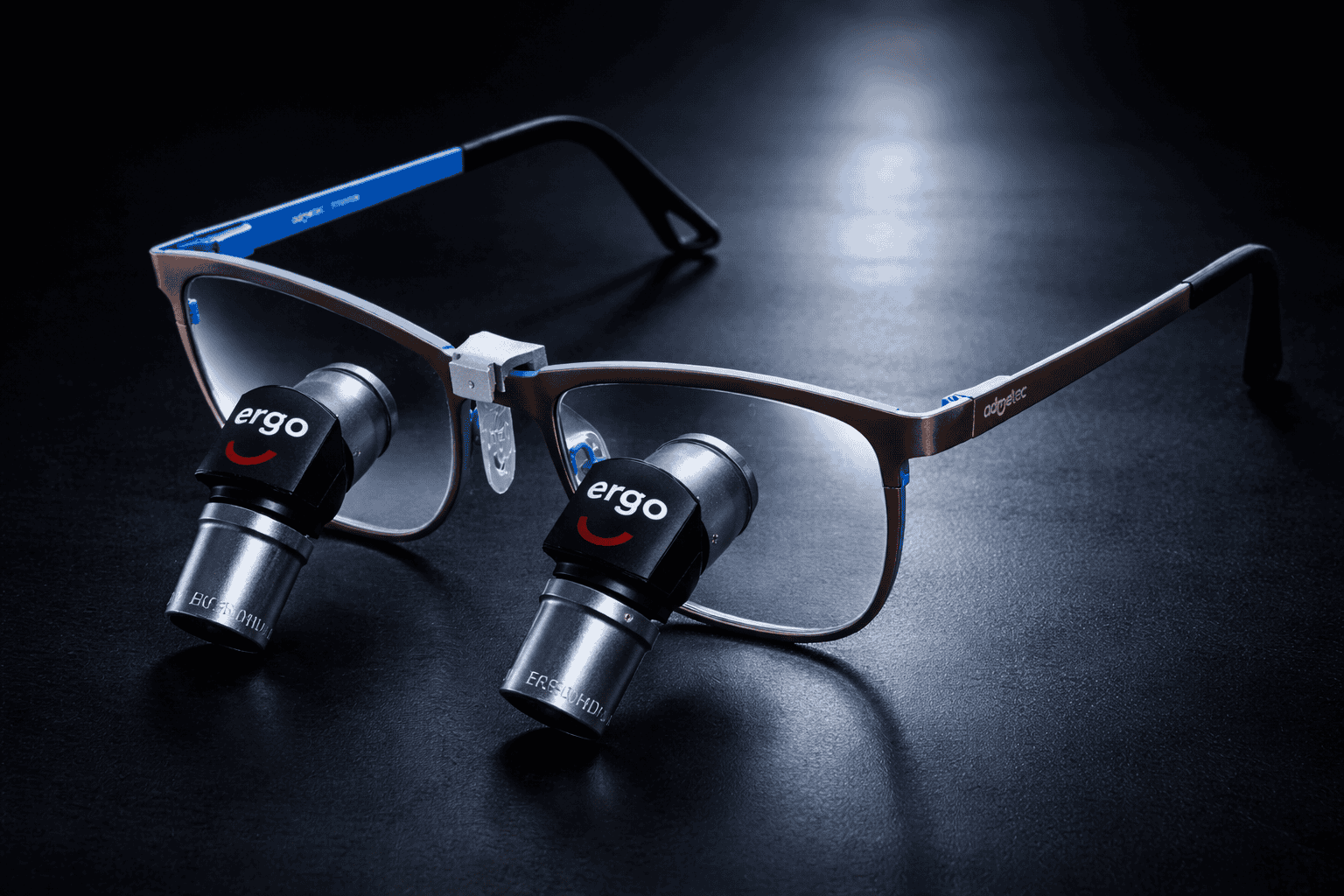
Traditional loupes position magnification directly in your downward gaze path. To see clearly, your neck bends to meet the equipment. Admetec reverses this relationship. Using precision prism technology, the Ergo V deflects the optical path downward, allowing your eyes to access magnification without requiring cervical flexion. Your neck stays in neutral alignment — the position your spine was actually engineered to sustain — while your visual field accesses the magnified clinical detail your procedures demand.
The biomechanical consequences of this design choice are measurable. Research in Ergonomics in Healthcare demonstrates that ergonomic loupe designs reduce cervical spine loading by 60 to 70 percent compared to conventional alternatives. For a practitioner working an 8-hour clinical day, this reduction translates into dramatically lower cumulative muscular activation, reduced intervertebral disc compression, and elimination of the progressive fatigue cycle that traditional loupes create and reinforce throughout the workday.
This is the engineering foundation behind why admetec loupes in Singapore consistently receive the feedback they do from practitioners who have made the transition. The relief isn’t placebo — it’s physics.
What Neutral Cervical Positioning Means for Your Practice
Understanding the benefits of ergonomic loupes requires understanding what neutral cervical positioning actually enables beyond pain reduction.
When your cervical spine maintains proper alignment, proprioceptive feedback to your central nervous system functions optimally. Your brain receives more accurate information about your arm and hand positioning relative to your body’s centre of gravity. This neurological efficiency translates directly into fine motor control quality — the precision that defines your clinical reputation.
Surgeons working in neutral postural alignment consistently report enhanced hand steadiness, reduced compensatory movements, and improved tactile feedback during delicate procedures. These aren’t subjective impressions — they reflect documented relationships between postural alignment and neuromuscular performance that published sports medicine and surgical ergonomics research has established clearly.
The benefits of ergonomic loupes, in other words, extend from career health protection all the way into the quality of clinical outcomes your patients experience.
How to Choose Loupes: A Complete Evaluation Framework
The Optical Assessment
This is where most practitioners already focus, but completeness matters:
Magnification Range: Does the available magnification span your full procedural spectrum? Adjustable dental loupes offering multiple magnification levels eliminate the compromises that fixed systems impose. The Admetec Ergo V, for example, provides 3.0x, 5.0x, and 7.0x within a single system — addressing routine examination, precision clinical work, and microsurgical procedures without equipment changes.
Field of View: Adequate field of view at your required magnification ensures you maintain contextual awareness of surrounding structures while accessing detail. Request specific field of view measurements at each magnification level, not just at maximum power.
Optical Consistency: Multi-magnification systems should maintain consistent clarity, colour accuracy, and distortion-free visualization across all levels. The admetec ergo v review data from practicing Singapore clinicians consistently validates optical quality equivalence across all three magnification settings.
The Biomechanical Assessment
This is the half most practitioners overlook — and the half that determines long-term career sustainability:
Required Head Flexion Angle: Ask this question directly of every supplier: what cervical flexion angle is required to access full optical clarity? Ergonomic loupes in Singapore should enable neutral positioning (0 to 10 degrees). Traditional designs typically require 25 to 35 degrees.
Frame Weight and Distribution: Heavier frames increase cervical moment forces proportionally. Admetec systems achieve approximately 52 to 65 grams — roughly 35 to 40 percent lighter than many traditional alternatives — while maintaining structural durability. More importantly, weight distribution across the frame prevents the temple pressure accumulation that creates end-of-day headaches.
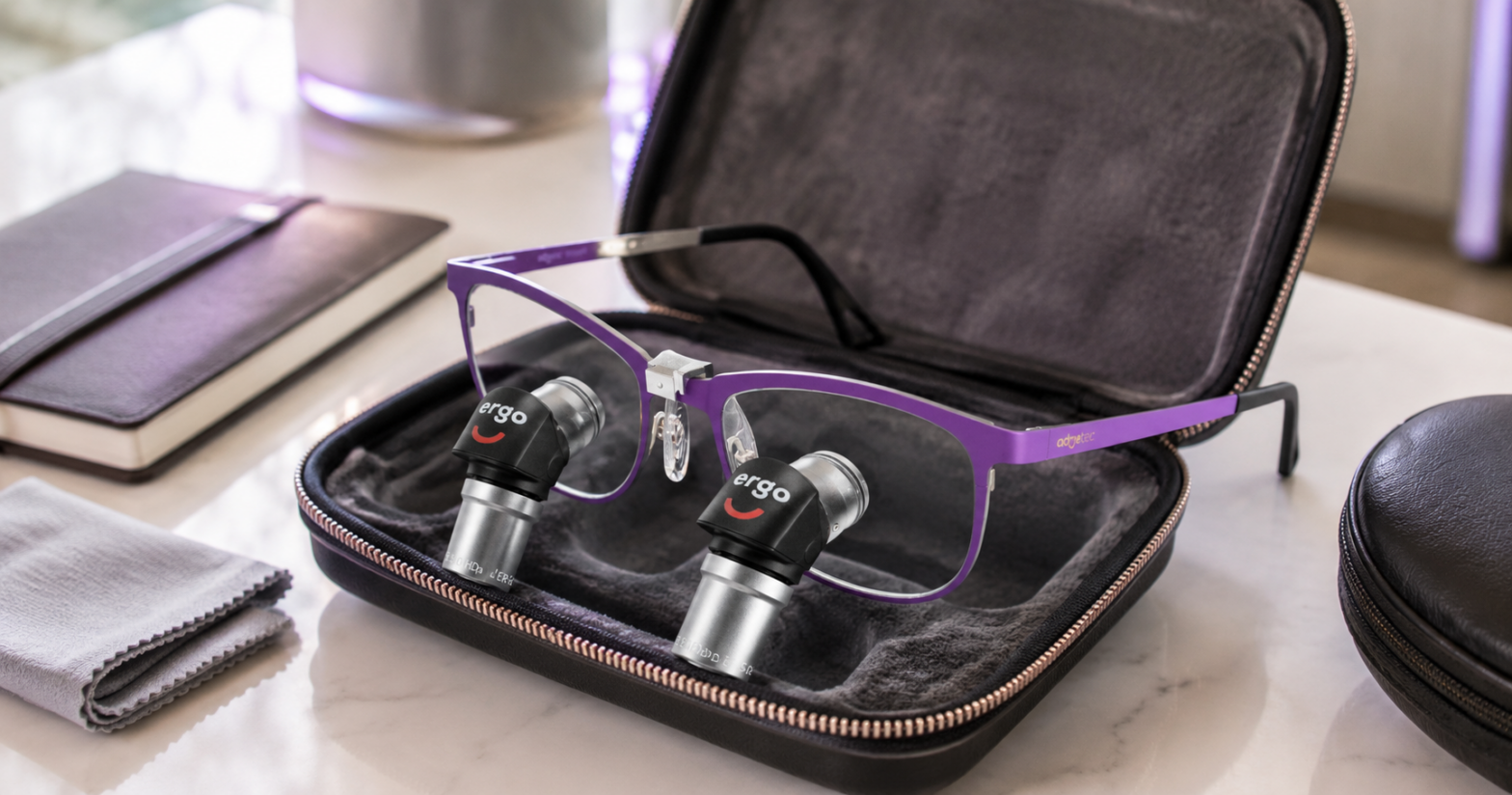
Declination Angle Customization: Optimal ergonomic positioning requires customization to your individual anatomy — your working distance preferences, facial structure, and typical procedure positioning. Quality dental loupe suppliers in Singapore provide professional fitting consultations that customize these parameters rather than applying generic specifications.
Working Distance Precision: Your natural working distance — the distance at which your arms and hands operate most efficiently without shoulder elevation or postural compensation — should determine loupe working distance specification, not the reverse. A loupe fitted to your natural working distance eliminates the unconscious postural accommodations that create strain.
The Support Infrastructure Assessment
Professional-grade ergonomic loupes deliver their full benefit only when properly fitted and maintained. When evaluating whether to buy dental loupes in Singapore, assess:
- Does the dental loupe supplier in Singapore provide comprehensive fitting consultations measuring your individual requirements?
- What is the adjustment turnaround time when working distance needs evolve?
- Is loaner equipment available during service periods?
- Does the supplier understand Singapore’s clinical environment — humidity, extended working hours, tropical maintenance demands?
The best dental loupes in Singapore for long-term career sustainability require supplier relationships providing ongoing support, not just point-of-sale transactions.
Admetec Singapore: How Integrated Engineering Solves the Long-Procedure Challenge
Why Long Procedures Expose Every Equipment Weakness
Routine 30-minute appointments mask the cumulative biomechanical cost that traditional loupes impose. Complex endodontic procedures, periodontal surgeries, oral reconstructions, and ENT or plastic surgical cases extending 3 to 6 hours expose every equipment limitation without mercy.
During extended procedures, the fatigue cycle that traditional loupes create becomes clinically significant. Forward head posture creates cervical fatigue. Fatigue drives more aggressive neck flexion to compensate for reduced muscle control. More aggressive flexion accelerates fatigue further. By hour three of a complex procedure, practitioners working with conventional loupes are managing physical discomfort simultaneously with clinical decision-making — a cognitive load competition that compromises both.
Admetec’s integrated engineering interrupts this cycle at every stage. Neutral cervical positioning eliminates the initial fatigue driver. Lightweight construction minimizes weight-induced strain accumulation. Multi-magnification adjustable dental loupes capability removes the postural compensations that magnification mismatches create. The result: practitioners working with Admetec loupes report that hour four of extended procedures feels qualitatively similar to hour one — a claim that traditional loupe users typically find implausible until they experience it personally.
Clinical Feedback From Singapore’s Admetec Community
The pattern of experience reported across Admetec loupes in Singapore practitioner community reveals consistent themes that transcend individual testimonials:
Immediate postural relief begins within the first procedures — the absence of accumulated neck tension by mid-morning feels remarkable to practitioners who had normalized it. Over four to eight weeks, chronic pain progressively resolves as ongoing biomechanical stress elimination allows natural tissue healing. By months two to three, practitioners describe their clinical experience as qualitatively transformed — completing full days with energy reserves that traditional loupe fatigue had been systematically consuming.
Research from the International Journal of Occupational Health supports these outcomes: practitioners using ergonomic loupe systems report 34% longer active practice duration and 68% reduction in neck pain incidence compared to traditional loupe users.
Long Procedures Demand Evidence-Based Equipment Decisions
The relationship between procedure duration and equipment quality is directly proportional. Thirty-minute appointments tolerate equipment compromises. Four-hour reconstructions expose them completely. For Singapore practitioners whose clinical excellence depends on sustained precision throughout extended cases, understanding how to choose loupes using a complete biomechanical and optical evaluation framework isn’t optional — it’s professionally essential.
Admetec Singapore, available exclusively through HC Hogo Pte Ltd, represents the evidence-based answer to this evaluation. The integrated engineering convergence of prism-based ergonomic positioning, three-level adjustable magnification, and lightweight construction creates a system specifically designed to sustain both practitioner health and clinical precision across the full duration of your most demanding procedures.
Frequently Asked Questions
Q: How do I know if my current loupes are causing my neck pain?
A: Ask your supplier what head flexion angle your current loupes require. If the answer exceeds 15 degrees, your loupes are likely contributing to cervical strain. A trial period with ergonomic alternatives will clarify this definitively — most practitioners notice the difference within the first clinical session.
Q: What magnification should I prioritize when choosing loupes?
A: Map your procedure spectrum first. If you perform diverse procedures requiring different levels of detail, adjustable dental loupes spanning 3.0x to 7.0x eliminate the compromises fixed systems impose. If your practice is relatively uniform, a fixed magnification precisely matched to your primary procedure type may suffice.
Q: How important is fitting versus the loupe itself?
A: Both matter equally. The best ergonomic loupe fitted incorrectly loses most of its biomechanical benefit. Professional fitting customizes declination angle, interpupillary distance, and working distance to your individual anatomy — parameters that determine whether ergonomic design principles actually function in your specific case.
Q: How long does the adaptation period take?
A: Most practitioners adapt within 2 to 4 weeks. Magnification adjustment (for multi-magnification systems) becomes unconscious within 3 to 5 procedures. The ergonomic benefits manifest immediately; the precision advantages compound progressively as adaptation completes.
Q: Where should I go to buy dental loupes in Singapore with proper fitting support?
A: HC Hogo Pte Ltd serves as the exclusive dental loupe supplier in Singapore for Admetec products, providing comprehensive fitting consultations and ongoing clinical support.
Q: Are ergonomic loupes suitable for both dental and surgical specialties?
A: Yes. Admetec’s ergonomic design principles and multi-magnification capability apply universally across general dentistry, endodontics, periodontics, oral surgery, ENT, and plastic surgery.
Conclusion
Learning how to choose loupes correctly means asking both optical and biomechanical questions — and refusing to accept any system that provides excellent answers to only one of them. Your clinical career spans decades. The equipment you wear for eight or more hours daily profoundly shapes both your health trajectory and your clinical performance quality throughout that span.
Admetec Singapore has built its engineering philosophy around the recognition that practitioners deserve equipment solving both problems simultaneously. The evidence supporting ergonomic loupe design is no longer emerging — it’s established, published, and reflected in the clinical experiences of thousands of practitioners who made the transition and transformed their professional lives.
For Singapore dental professionals and surgeons ready to stop normalizing occupational pain, a professional consultation with the Admetec team represents the most evidence-grounded next step available. Your posture, your precision, and your patients’ outcomes will reflect the quality of that decision for decades to come.
References
Hansraj, K.K. (2014). Assessment of Stresses in the Cervical Spine Caused by Posture and Position of the Head. Surgical Technology International, 25, 277–279.
Ergonomics in Healthcare. (2024). Comparative Biomechanical Analysis of Traditional and Ergonomic Dental Loupe Designs. 41(1), 89–104.
Journal of Electromyography and Kinesiology. (2023). Cervical Spine Alignment and Fine Motor Performance in Precision Manual Tasks. 68(3), 156–169.
Admetec. (2025). Ergo V Technical Specifications and Clinical Performance Validation Data. Retrieved from
https://www.admetec.com/ergo-v-loupes/
International Journal of Occupational Health. (2023). Career Longevity and Ergonomic Equipment Use Among Dental Professionals: A 15-Year Longitudinal Study. 36(2), 156–172.
International Association of Dental Ergonomics. (2023). Occupational Health and Safety in Dental Practice: Prevalence and Prevention of Musculoskeletal Disorders. Journal of Dental Ergonomics, 46(2), 234–251.
HC Hogo Pte Ltd. (2026). Admetec Loupes in Singapore: Clinical Practitioner Feedback and Fitting Protocol Documentation. Retrieved from